




Product


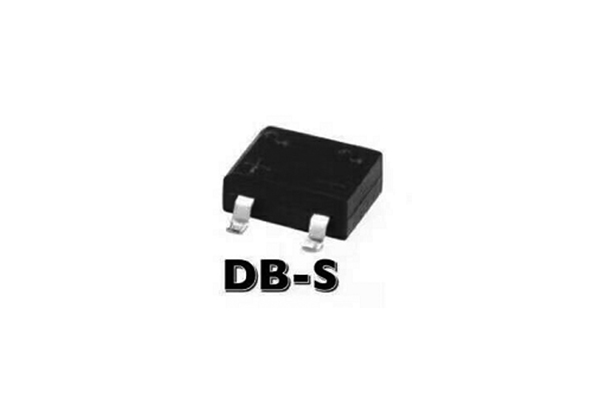


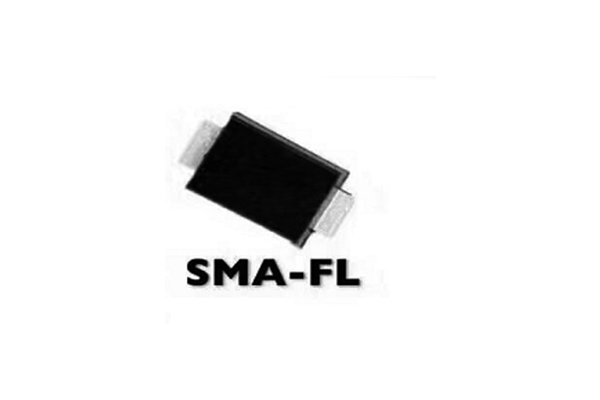


News


Schottky diodes are named after their inventor, Dr. Schottky, short for Schottky Barrier Diode (abbreviated SBD). SBD is not fabricated by the principle of forming a PN junction by contacting a P-type semiconductor with an N-type semiconductor, but by a metal-semiconductor junction principle formed by metal-to-semiconductor contact. Therefore, SBD is also called a metal-semiconductor (contact) diode or a surface barrier diode, which is a hot carrier diode.
Low-power, high-current, ultra-high-speed semiconductor devices that have been introduced in recent years. The reverse recovery time is extremely short (can be as small as a few nanoseconds), the forward voltage drop is only about 0.4V, and the rectified current can reach several thousand milliamps. These excellent characteristics are unmatched by fast recovery diodes. Medium and small power Schottky rectifier diodes are mostly packaged.
Any non-synchronous DC/DC converter requires a so-called Schottky diode. In order to optimize the overall efficiency of the scheme, it is generally preferred to select a Schottky diode with a low forward voltage.
The reverse recovery time of a typical diode is about several hundred nS. If the high speed diode is lower than one hundred nS, the Schottky diode has no reverse recovery time, so the Schottky diode switching time of the small signal is about several tens of pS. The special large-capacity Schottky diode switching time is only tens of pS. Because the general diode will cause EMI noise due to reverse current during the reverse recovery time. Schottky diodes can be switched immediately, with no reverse recovery time and reverse current problems.